
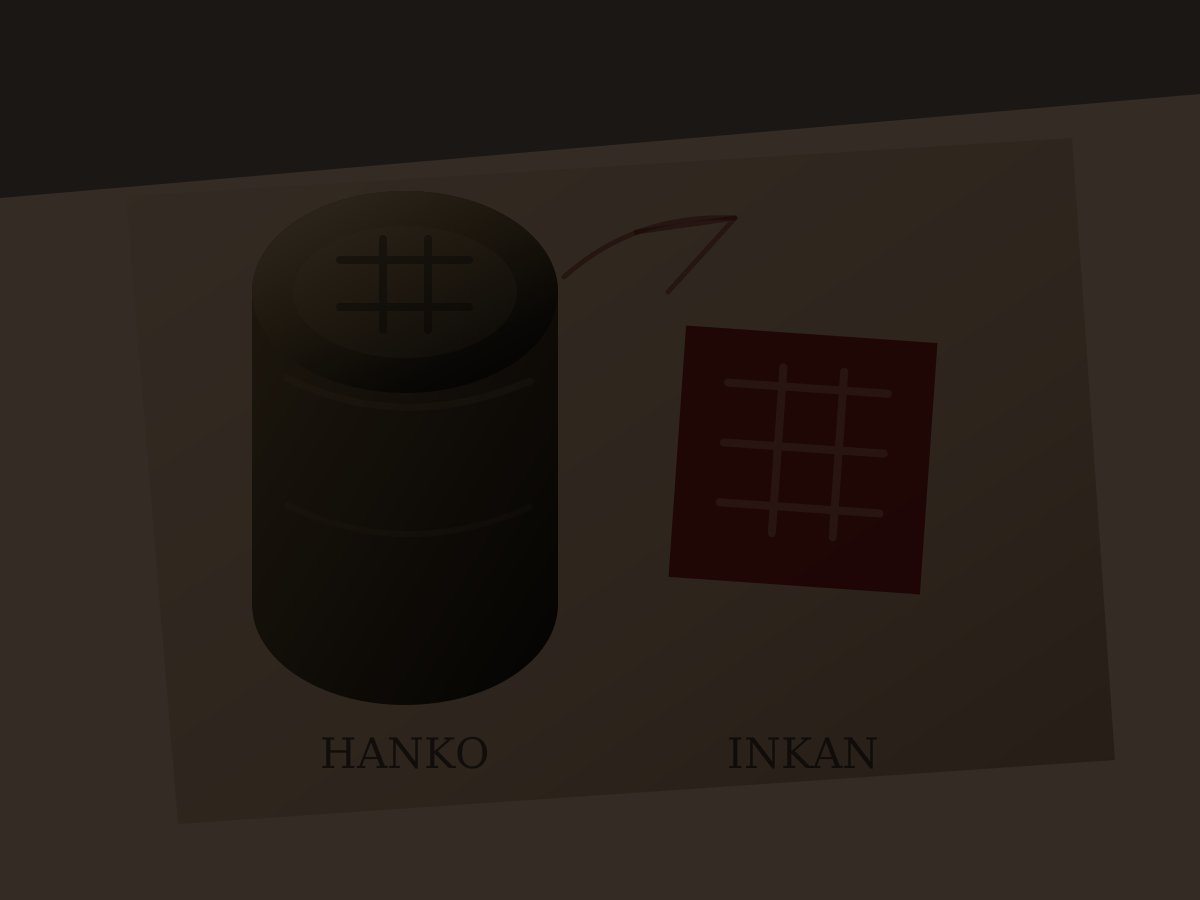
If you have searched for a Japanese personal seal, you have probably seen several words: hanko, inkan, Japanese seal, jitsuin, ginkoin, and mitomein.
At first, these terms can feel confusing. In English, people often use "Japanese seal," "name stamp," or "personal stamp" to describe the same general object. In Japanese, however, each word has a slightly different meaning.
This guide explains hanko vs inkan, what an inkan seal is, and how different types of Japanese seal are used in daily life, business, and personal expression.
Hanko vs Inkan: The Simple Difference
The simplest way to understand hanko vs inkan is this:
- Hanko usually means the physical stamp itself.
- Inkan usually means the stamped impression or registered seal mark.
In everyday Japanese conversation, many people use both words in a similar way. For example, someone may say "I need to bring my inkan" when they are actually talking about the stamp they hold in their hand.
So, while there is a technical difference, the words often overlap in real life.
For English-speaking users, "hanko" is usually easier to understand as "a Japanese name stamp," while "inkan" is often used when talking about a formal seal or seal impression.
What Is a Hanko?
A hanko is a physical stamp engraved with a person's name, family name, business name, artist name, or symbol.
To use it, you press the engraved end into red ink and stamp it onto paper. The red mark becomes your personal seal impression.
In Japan, hanko have traditionally been used instead of handwritten signatures in many situations. They can be used for documents, banking, delivery receipts, workplace approvals, letters, and creative work.
A hanko can be simple and practical, or it can be carefully made from beautiful materials such as wood, horn, stone, jade, or other natural materials.
For someone outside Japan, a hanko can be understood as a personal signature stamp with cultural meaning.
What Is an Inkan Seal?
An inkan seal usually refers to the mark made by the hanko, especially when that mark is registered or used for identification.
In a strict sense, the inkan is not the physical object. It is the stamped impression. However, in everyday conversation, people often use "inkan" to mean the stamp itself.
This is why English speakers often get confused. If you see "inkan seal" online, it may refer to:
- the physical Japanese seal
- the impression made by the seal
- a registered personal seal
- a custom name stamp
- a traditional Japanese personal mark
In practical terms, if you are shopping for a custom Japanese seal, both "hanko" and "inkan" may lead you to similar products. But if you are learning the cultural meaning, it helps to know the difference.
Japanese Seal: A Useful English Term
The phrase Japanese seal is often the easiest term for English-speaking users.
A Japanese seal can refer to a hanko, an inkan, or a personal stamp used in Japanese culture. It is a broad and simple term that makes sense even if someone has never heard the word "hanko" before.
For example:
- A hanko is a type of Japanese seal.
- An inkan is the seal impression or registered mark.
- A jitsuin is an official registered Japanese seal.
- A ginkoin is a Japanese seal used for banking.
- A mitomein is a Japanese seal used for everyday approval.
If you are explaining the concept to someone unfamiliar with Japanese culture, "Japanese personal seal" is often the clearest phrase.
Hanko vs Inkan in Everyday Conversation
In daily Japanese conversation, the difference between hanko vs inkan is not always strict.
Many people say:
- "Please bring your inkan."
- "Please stamp your hanko here."
- "Do you have a seal?"
- "Can you put your inkan on this form?"
In many situations, all of these phrases point to the same action: pressing a personal seal onto paper.
This is similar to how English speakers may use "signature" to mean both the act of signing and the written mark itself. The exact word matters in formal contexts, but in casual use, people understand the meaning from the situation.
Jitsuin: The Official Registered Japanese Seal
A jitsuin is the most formal type of Japanese seal.
It is a personal seal that has been officially registered with a local government office in Japan. Once registered, the seal can be used for important legal or financial procedures.
A jitsuin may be required for situations such as:
- buying or selling property
- purchasing a car
- signing major contracts
- inheritance procedures
- certain legal documents
- company-related procedures
Because a jitsuin carries serious legal meaning, it is usually treated with care. Many people choose a durable and distinctive material for their jitsuin so that it is not easily confused with other seals.
For international customers, a jitsuin is best understood as an officially registered personal seal in Japan.
Ginkoin: The Japanese Seal for Banking
A ginkoin is a Japanese seal used for bank-related procedures.
Traditionally, people in Japan registered a specific seal with their bank. This seal was then used to confirm identity for certain account actions.
The word "ginkoin" comes from:
- ginko = bank
- in = seal
A ginkoin may be used for bank account opening, withdrawals, account changes, or other financial procedures, depending on the bank and situation.
Today, many banks use digital systems, signatures, PINs, and online verification. Still, the ginkoin remains an important part of Japanese seal culture.
Mitomein: The Everyday Japanese Seal
A mitomein is an everyday Japanese seal used for general approval or acknowledgment.
This is the most casual type of personal seal. It is often used for simple daily tasks, such as:
- receiving packages
- confirming documents
- approving internal paperwork
- signing simple forms
- marking casual records
A mitomein does not usually carry the same legal weight as a jitsuin. It is more like a daily approval stamp.
If you have ever seen a small Japanese name stamp used at home or in an office, it was probably a mitomein.
Hanko vs Inkan vs Jitsuin vs Ginkoin vs Mitomein
Here is a simple comparison.
| Term | Meaning | Main Use |
|---|---|---|
| Hanko | Physical stamp | General personal stamping |
| Inkan | Seal impression or registered seal mark | Identification or formal seal mark |
| Japanese seal | Broad English term | Explaining hanko or inkan to international users |
| Jitsuin | Official registered seal | Major legal or financial procedures |
| Ginkoin | Bank seal | Bank-related procedures |
| Mitomein | Everyday seal | Daily approval and confirmation |
If you are new to Japanese seals, remember this:
A hanko is the stamp. An inkan is the impression or registered mark. Jitsuin, ginkoin, and mitomein are different types of seals used for different purposes.
Which Japanese Seal Do People Use Today?
Japan is becoming more digital, and many procedures now use electronic signatures, online forms, or identity verification systems. However, Japanese seals are still part of daily life, business culture, and personal tradition.
Some people use a seal for practical reasons. Others enjoy it as a cultural or personal object.
For example, a Japanese seal may be used today for:
- formal documents
- business paperwork
- personal letters
- artwork
- packaging
- branding
- stationery
- gifts
- personal collections
For international users, the appeal is often not only legal or practical. Many people are interested in the beauty, meaning, and personal feeling of owning a custom Japanese seal.
Why Hanko vs Inkan Matters for International Buyers
Understanding hanko vs inkan helps international buyers choose the right product and understand its meaning.
If you are buying a seal for official use in Japan, you need to know the specific requirements for your purpose. A jitsuin, ginkoin, or mitomein may have different rules depending on the situation.
If you are buying a Japanese seal for personal use, art, stationery, or gifting, you have more freedom. You can focus on the name, design, material, and feeling of the seal.
This is where a custom stone seal becomes especially attractive. It does not need to be only a tool for paperwork. It can also be a personal object that carries your name, taste, and story.
Japanese Seal as a Personal Object
A Japanese seal can be practical, but it can also be deeply personal.
In many English-speaking countries, a handwritten signature is seen as a personal mark. It belongs to you. It carries your identity. In Japan, a seal has often played a similar role.
When your name is engraved into a seal, it becomes something more lasting than a quick signature. When the seal is made from natural stone, jade, or another beautiful material, it gains a sense of weight, permanence, and quiet luxury.
That is why some people choose a Japanese seal not only because they need one, but because they want one.
Can Foreigners Own a Hanko or Inkan Seal?
Yes. A hanko or inkan seal is not only for Japanese people.
Many international customers create Japanese-style seals using:
- their first name
- family name
- initials
- artist name
- business name
- brand name
- meaningful word
- symbolic design
For non-Japanese users, a custom seal can be used for letters, artwork, packaging, journals, creative projects, or as a meaningful gift.
It can also be a beautiful way to connect with Japanese culture while creating something personal and unique.
How to Choose the Right Japanese Seal
When choosing a Japanese seal, start by asking how you want to use it.
If you need it for official use in Japan, you should check the rules for that specific purpose. A registered seal may require certain size, name, or design conditions.
If you want it for personal use, you can choose more freely. Think about:
- what name or word to engrave
- whether you prefer Japanese, Chinese, or alphabet-based characters
- what material feels right
- whether the seal should feel formal, artistic, elegant, or personal
- how you want to use the stamped impression
For a special personal seal, natural stone is a strong choice. Each piece has its own color, texture, and pattern, making the seal feel truly individual.
Hanko vs Inkan: Final Summary
So, what is the difference between hanko vs inkan?
A hanko is usually the physical stamp. An inkan is usually the stamped impression or registered seal mark. A Japanese seal is a broad English term that can describe both.
The main types of Japanese seals include:
- jitsuin, an official registered seal
- ginkoin, a bank seal
- mitomein, an everyday approval seal
For official use, these differences matter. For personal use, they help you understand the rich culture behind Japanese seals.
A hanko or inkan seal is not just a stamp. It can be a mark of identity, a connection to Japanese tradition, and a personal object made to carry your name.
Create Your Own Japanese Seal
At STONE SIGNATURE, we believe a personal seal should feel meaningful, beautiful, and uniquely yours.
Whether you call it a hanko, an inkan seal, or a Japanese seal, it is a small object with a lasting presence. A custom stone seal gives your name a physical form, something you can hold, use, and keep.